


Being stopped and searched by police is one of the most common ways people come into contact with the criminal justice system in New South Wales. It can happen on the street, at a music festival, during a routine traffic stop, or even at your own front door. Understanding when police are legally entitled to search you — and when they are not — is essential if you want to protect your rights and avoid saying or doing something that makes a difficult situation worse.
Many people assume police can search anyone, anytime, for any reason. That isn't correct. Police powers to search a person in NSW are governed by legislation and are subject to important limits. If those limits are exceeded, any evidence found may be challenged in court. This is why it's vitally important you seek legal advice as soon as possible if you've been searched and charged as a result. Our Sydney drug charge lawyers regularly deal with matters that begin with a police search, and we know exactly what to look for when reviewing whether that search was lawful.
When Can NSW Police Legally Search You?
Police in New South Wales generally need a lawful reason before they can search your person. The main situations where this power arises include:
Reasonable Suspicion
Police can search you without a warrant if they hold a reasonable suspicion that you are carrying something illegal — such as drugs, a weapon, or stolen property. "Reasonable suspicion" is more than a hunch or a gut feeling. It must be based on specific facts or circumstances that would lead a reasonable person to suspect wrongdoing. Nervous behaviour alone, or simply being in a particular area, is generally not enough on its own.
Search Incidental to Arrest
If you are lawfully arrested, police are entitled to search you as part of that arrest. This is designed to ensure officer safety and to secure any evidence relevant to the alleged offence.
Consent Searches
Police may also ask for your consent to search you or your belongings. You are entitled to say no. If you do consent, it's important to understand that anything found can still be used against you. Many people don't realise that consent can be withdrawn at any time, including part-way through a search.
Searches Under Warrant
In some circumstances, police may hold a warrant that authorises a search of you, your vehicle, or your property. A warrant must specify what is being searched for and the scope of the search. If you're unsure whether a warrant is valid, our article on what to do during a search warrant execution explains the basics of how these situations should unfold.
Drug Detection Dogs
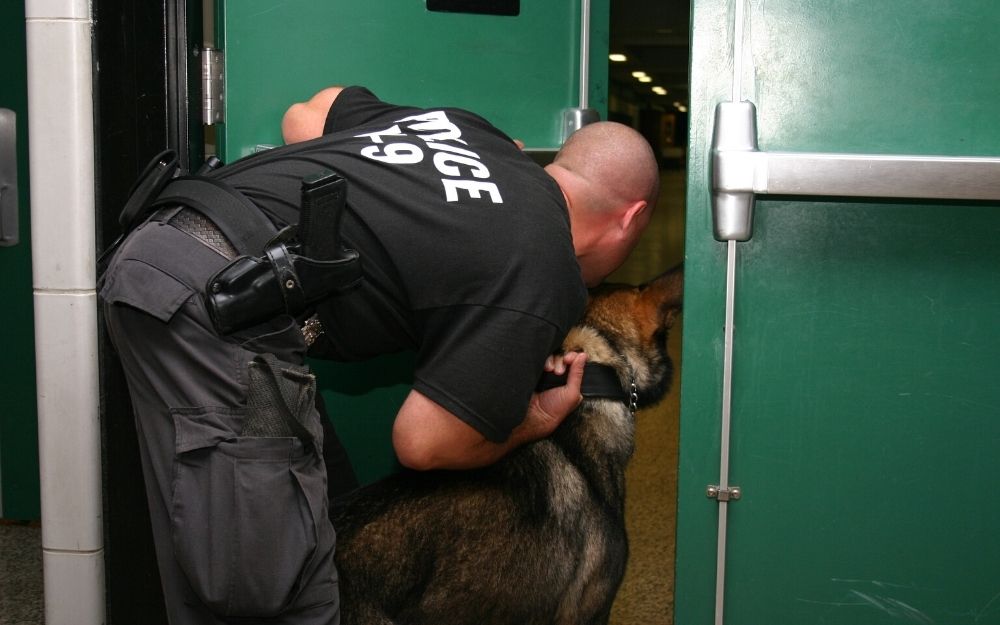
It's common at festivals, train stations and licensed venues across Sydney for police to use drug detection dogs. A dog sitting near you does not automatically mean police can search you — but in practice, it is often treated by officers as contributing to reasonable suspicion. This is a heavily contested area of law, and the lawfulness of dog-indication searches is frequently challenged by criminal defence lawyers.
What Does a Lawful Search Actually Involve?
NSW police powers distinguish between different types of searches, and the rules differ depending on the type:
General or Frisk Searches
This is the most common type of search and generally involves police patting down your outer clothing, checking pockets, and looking through bags you are carrying. Police are required to conduct these searches in a way that causes the least possible embarrassment, and wherever practicable, a search should be conducted by an officer of the same sex.
Strip Searches
Strip searches are far more invasive and are subject to stricter safeguards because of the significant impact they have on a person's privacy and dignity. Police must generally have a higher degree of suspicion or urgency to justify a strip search, and there are rules about where these searches can take place, who can be present, and how they must be conducted. If you believe you were strip searched unlawfully or inappropriately, this is a serious issue that should be raised with a criminal lawyer immediately.
Vehicle Searches
Searches of your car fall under a related but distinct set of rules. We've covered this in detail in our article on whether police can search your car, which explains the specific triggers that allow officers to search a vehicle without a warrant.
What Happens If Police Search You Unlawfully?
If police exceed their powers — for example, by searching you without reasonable suspicion, failing to identify themselves, or conducting a strip search without proper justification — this can have serious consequences for any resulting charges. Evidence obtained through an unlawful search may potentially be excluded from use in court, depending on the circumstances.
This doesn't mean an unlawful search automatically means charges will be dropped. Courts weigh up a range of factors, including the seriousness of the breach and the public interest in the evidence being admitted. This is a complex area of law and one where experienced legal representation makes a genuine difference to the outcome of a case. Our team has handled thousands of matters involving disputed police powers and knows how to properly scrutinise the circumstances surrounding a search.
For a broader explanation of how these principles apply more generally — not just to searches of your person — see our article on police searches without a warrant and what you need to know about seizure of property by police.
Your Rights During a Police Search
Regardless of the type of search, there are some general principles worth keeping in mind:
- You are entitled to ask the officer for their name, rank and station.
- You are entitled to ask why you are being searched.
- You do not have to answer questions beyond providing basic identification details in most circumstances.
- You should remain calm and avoid physically resisting, even if you believe the search is unlawful — this is something to raise with a lawyer afterwards, not at the scene.
- You should remember as many details as possible — time, location, officer descriptions, and what was said — as these details can be critical later.
For a more detailed breakdown of your broader rights when interacting with police, read our guide on your rights when charged under criminal law.
Charged After a Police Search? Don't Wait to Get Advice
If you've been searched by NSW Police and charged with an offence as a result, the circumstances of that search could be central to your defence. Acting quickly can make all the difference — evidence, CCTV footage and witness recollections can disappear or become unreliable over time.
Our Sydney criminal lawyers have extensive experience reviewing the lawfulness of police searches and building strong defence strategies around them. Daniel Hannay, Hugh Stitt, Farshad Sarabi and Regan Harms bring genuine criminal law expertise and uncompromising dedication to every matter we take on.
Best recommendation: talk to us now. Worst thing to do: do nothing.
Contact Hannay Criminal Defence today for a free initial consultation. Call our Sydney office on 1800 562 096, visit us at Level 11, Suite 1101, 265 Castlereagh St, Sydney 2000, or reach out through our contact page to arrange a time to speak with our team.
This information is general in nature and does not constitute legal advice. Your circumstances are unique, and you should seek tailored legal advice from an experienced criminal lawyer before taking any action.