

Tag

illegal

pulled over by a police officer

What To Expect If You Are Pulled Over By the Police this Christmas

By Traffic Offences

There are a number of myths associated with breath testing and it’s important to understand – not only your rights – but also your obligations.

Here are a few of the common breath and drug testing myths:

Myth #1 – You Won’t Be Stopped Unless You Do Something Wrong

The police can pull over anyone and for any reason. You are obligated to provide a saliva sample for a drug test or a breath sample two gauge alcohol consumption. The police do not have to give a reason why they pulled you over, and the fact that you were driving safely is not a defence.

Myth #2 – If You’re in an Accident and It’s Not Your Fault, You Won’t be Breath Tested

In the case of an accident, everyone involved is likely to be breath and/or drug tested. As per Myth #1, the police do not need to provide a reason why they are testing you, and the fact that you didn’t cause the accident directly is not relevant. Even if you are injured, the police will likely ask you to provide a specimen.

Myth #3 – You Can Call Your Lawyer Before Providing a Sample

The cliché American television show, “I’m not doing anything until I’ve spoken to my lawyer,” does not apply to roadside tests. In fact, any attempt to delay the providing of a specimen may result in you being arrested. Furthermore, if you have been drinking or taking drugs, it’s unlikely that a short delay will have any impact whatsoever on your results.

Myth #4 – You Can Choose the Type of Specimen You Provide

The police hear this one all the time; “I’m not prepared to provide a breath sample immediately, but I’m happy to accompany you back to the police station to provideed a blood sample.” This is based on a couple of assumptions – that the delay will have a positive impact on the result (refer to Myth #3) and that the police officer will most likely not have the time or inclination to take someone back to the police station.

You are legally obligated to provide the sample that police ask for and failing to do so will likely result in arrest.

The Christmas season is a time of parties and celebration. It’s also when police are at their most vigilant, so make sure you take every precaution to avoid a drink-driving or drug conviction this festive season.

Contact our Gold Coast criminal lawyers today for more information.
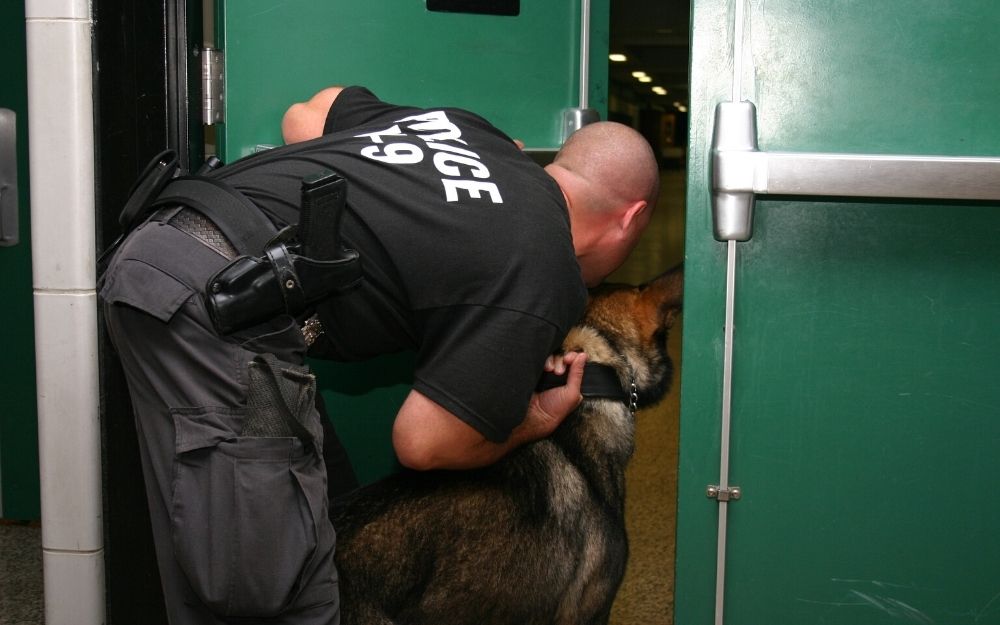
canine and the handler

A Police Search of Your Property – What You Need to Know

By Criminal Law, General News, Major Criminal Law

The police do not have limitless rights when it comes to searching people or their property.

Laws are in place to protect everyone – including you – from law enforcement officials overstepping their bounds. The following will give you the basics of your rights when it comes to a police search of your property.

The Police Don’t Always Need a Warrant

There are circumstances when the police can enter your home without requiring a warrant. These include –
– Handing over or serve a legal document
– In urgent circumstances, for example, injury to a person
– To investigate a traffic offence, for example, to take a breath test for alcohol
– To catch someone who has escaped from prison or from being arrested
– To search for evidence if they reasonably suspect it may otherwise be hidden or destroyed
– To arrest someone
– To reach a crime scene
– To detain someone under an anti-terrorism ‘preventative detention order’—if they reasonably believe that the person they’re looking for is on your property
But if none of these circumstances applies, and should they not have a warrant, you have a right to refuse entry to the police. All you need to do is clearly state that you do not grant permission for the police to enter your property, and if possible say so in front of a witness. Should the police still insist on entering, or if you disagree with the validity of their claims, contact your lawyer immediately.

Warrants Come with Terms and Conditions

Search warrants do not give the police blanket authority to do anything they want inside your home. The warrant will explain exactly what the police are allowed to do and may include digging up a portion of your property, opening locked items if needs be, searching individuals on the premises, or removing wall or ceiling panels. However, if it is not included on the warrant, then the police are not allowed to do it without additional authorisation. Ask for a copy of the warrant, and contact your lawyer.

The Police Can Only Stay for a ‘Reasonable’ Time

This means, that if the warrant to search your property says that the police can enter your home and arrest an individual, they can only stay for the time required to carry out that activity. It could be said that if the police then sit down and begin questioning the individual, that they have gone past the reasonable allocated time and could be asked to leave. In these circumstances, contact your criminal lawyer and ask their advice.

seeking a lawyers help

Have You Been Falsely Accused of a Crime?

By Major Criminal Law

Having false accusations levelled against you can be incredibly traumatic.

Besides the psychological implications – which have been said to include high levels of anxiety, depression and sometimes post traumatic stress – there are the legal aspects to consider. How you handle the allegations will go a long way to setting things right. Here are some points you need to know about false allegations.

Making a False Allegation is a Crime in Itself

Making a false accusation is a crime, as long as the person making the accusation knew the allegation to be false, and intended the accusation to result in the investigation of an offence. This law, of course, is designed to dissuade individuals from using the legal system as a tool to further their own agenda. Common examples of this include using allegations as a strategy to claim custody in family disputes or to settle personal vendettas. It’s important that you seek legal advice and discuss the allegations, evidence and options with your legal counsel.

Just Because the Claim is False, Don’t Think It’s Not Serious

The legal system is there to protect you, but until you know all the details of the case against you it’s important to treat the case as serious. Should your accuser have compelling evidence, corroborating witnesses or some other piece of information that makes their story believable, you should consider it important to disprove the allegations, rather than just claiming your innocence. This approach will be much more useful in a legal setting, where your accuser is attempting to send the case.

Make yourself aware of the law

Regardless of the circumstances, you should familiarise yourself with the law as it relates to your accusation. Too often, people assume that “common sense,” says that they haven’t broken any laws – but this may not be the case. It’s vital that you ascertain quickly whether you have in fact broken any laws, and what actions you should take. Speak to your legal adviser, and tell them all the details; including your relationship with the accuser, your actions during the time of the alleged incident, and any other information that could potentially be brought up by the other party.

The law is there to protect you, but entering into a legal process – even an unfair one – unprepared is not only foolish but dangerous.

Contact our Sydney Criminal Lawyers and Gold Coast Criminal lawyers today for more information.

Want to learn more, click here

drinking while driving

Drug Driving: Could YOU Be Caught Out 

By Criminal Law, General News, Major Criminal Law

The number of drivers being charged with drug driving is on the rise.

Queensland Police have carried out a number of ‘blitzes’ and advertising campaigns designed to educate the driving public. Most people are now aware that roadside saliva tests can be carried out by police in the same way as an alcohol breath test. What is less well known is what substances the tests will identify, and what is considered an illicit drug.

1. Saliva Samples Don’t Test for Everything…Yet

At the moment, the saliva sample will test for known active ingredients in certain drugs –

  • Methylamphetamine – Speed or ice
  • MDMA—Active ingredient in ecstasy
  • THC—Active ingredient in cannabis

Of course, this test is always being improved, and it’s unsafe to assume that other drugs won’t be identifiable through a saliva sample in the near future. There may also be other tests introduced to broaden the number of testable substances.

2. Driving Under the Influence of Prescription Drugs

The Queensland Government warns members of the public not to drive under the influence of ANY substance – including some prescription medications.  It’s important to read the warnings associated with your medications and to take them seriously. Importantly, if you are pulled over by the police, and they ask about your prescription medication then do not make any statement that may incriminate you. The police may rely on your admission at a later date.

3. Breath Test Rules Apply to the Saliva Test

The rumour that you are not legally obligated to provide a saliva sample for drug testing is simply not true. In fact, failing to do so will – in all likelihood – make things much worse for you. Failing to provide a sample will result in you being fined and potentially imprisoned. You may also be charged with driving under the influence of drugs, despite no sample being present.

Drug driving charges are serious; in that, they may come with other drugs charges attached, such as possession, or worse.

If you are charged with any drug offence, ask to speak with a lawyer as soon as possible and contact criminal lawyers Brisban and Gold Coast criminal lawyers at Hannay Criminal Defence HERE.

lady justice

Finding the Best Criminal Lawyer for You

By Criminal Law

When it comes to hiring a criminal lawyer, there is no shortage of options.

A quick search on Google will yield hundreds of results in your local area, and many more nationally, all claiming to be the very best criminal lawyers in the country. So how do you select the right criminal lawyer for you?

  1. Specific Experience

Criminal law is a broad discipline. In fact, attempting to name all the crimes in existence and their variants would be an enormous task. When seeking a Brisbane criminal lawyers, look for someone who has specific and meaningful experience in the area of expertise you require. Ask if they have taken on cases like yours before, and what they see as the key to success in your particular scenario. “Experienced in criminal law,” is far too generalistic, you are seeking someone who understands the specifics of your particular case.

  1. Flexibility and Maturity

Some lawyers are eager to get to court; their speciality may be in litigation or they may enjoy the limelight. Likewise, some lawyers will avoid court at all costs, given the option. Seek out a lawyer who will look at a case, and all the possibilities, and make decisions based on their merits. Perhaps there are more options available to you than going to court and arguing your case. A lawyer with flexibility and understanding will seek out the best possible avenue, rather than have a one-track mind.

  1. Local Knowledge

The very best criminal lawyer with specific experience and an eagerness to get you the best possible outcome may still not be the right person for the job. Do they know the judges? Do they have an understanding of local law? This is especially important in Australia, where different states have different laws, and local lawyers have a knowledge of local judges.

Local knowledge can be the difference between a good result and a disastrous one.

  1. Trust

Your lawyer must be someone you trust. In criminal cases you are going to have to be open and honest with them, talk about uncomfortable scenarios and potentially put your freedom in their hands. Make sure that when you sit down with your lawyer, you feel comfortable talking to them and that they are someone who you could work with. Ask about the case, talk about their approach and experience, and decide whether they are the right person for you.

A good Gold Coast criminal lawyers is someone who can put you in the best position to get a good result. Don’t gamble with your freedom and make the effort to find that person and have them in your corner.

female lawyer drafting legal document

Do I Need a Lawyer?

By Criminal Law

If you’ve been in a legal scrape and you’ve probably asked yourself this question. After all, lawyers cost money and if you can do it yourself, why wouldn’t you?

Here are some examples of when you should contact your lawyer.

  1. When You Are Not Sure What Action to Take

Perhaps you’ve been charged with a crime that you don’t entirely understand. Maybe law enforcement are insisting that you give some kind of statement, or offer some additional information. Perhaps you feel that your rights have been impinged in some way.

Your lawyer’s job is to clear up legal misunderstandings and offer you some clarity. They will explain the next steps, give you options and tell you what to say and – perhaps more importantly – what not to say.

  1. When You Don’t Trust the Situation

The most common example of this is when you are told, “you don’t have to get a lawyer involved just yet.” Statements like this are carefully worded; of course you don’t have to get a lawyer involved, it’s entirely up to you. But not having legal counsel present gives law enforcement time to talk to you, and get you to say things that could potentially incriminate you or enhance the case against you. Other warning statements include, “of course you can call your lawyer, let’s do that shortly,” and other delaying tactics. Don’t say anything, contact your legal counsel and wait for them to arrive. Remember, you are entitled to have a lawyer present, and asking for one is not in any way an admission of guilt.

  1. When You Need Support

Being arrested, or asked questions by police can be an intimidating experience. Maybe you are worried about what you are going to say, or perhaps you don’t know what to expect. Your lawyer can act as a support person for you, someone who understands the the process and can walk you through it. Sometimes it’s nice having someone in the room with your best interests at heart.

  1. When You are Going to Court

Self-representation is almost always a mistake. Even if you are incredibly articulate, with a good basic knowledge of the law, the advantage always lies with the side who has a professional as their representative.

Litigators salivate at the prospect of not having to deal with an experienced opposition council, because the complexities of the law – rather than just the merits of the case – can be used as a tool. Many good cases have been lost because defendants chose to represent themselves, assuming that their argument required no interpretation or legal precedent. Something that is regarded as ‘common sense’ by a defendant, may not be by a judge or jury.

When deciding whether you need a lawyer or not, consider both sides of the argument. Not only how much money you will save by not having legal counsel, but also how much money or time you may lose through not making the call. For the sake of a few dollars, it sometimes better to have someone by your side, rather than end up in jail or with a crippling fine.

Contact our Brisbane criminal lawyers today for more information.

Drug Charges Solicitors Brisbane & Gold coast

Drug Charges and What You Need to Know

By Criminal Law

Drug laws in Australia are both strict and complicated.

Numerous legislative changes have meant that it is difficult to write a set of specific guidelines without an understanding of individual circumstances. Therefore, we believe the most important recommendation you can receive is to seek qualified legal advice.

Having said that, here are some points you should be aware of:

  1. Any Quantity is Illegal

In Queensland, it is against the law to possess an illegal drug in any quantity. This is important because saying, “but it was only…” could be seen as more of an admission than a defence. However, if you meet a certain criteria – minor charge, good criminal record, etc – then you may be eligible for drug diversion. This means that you will be released on a good behaviour bond, with certain conditions in place. You can expect to attend some form of rehabilitation and may be required to make yourself available for drug testing.

  1. You May Not Get a Criminal Conviction

This is entirely at the discretion of the court, but there may be an opportunity to maintain your clean record. Importantly, just as will diversion, there is no guarantee of this being an option, and if you have multiple drug offences, a criminal conviction is more likely.

  1. Don’t Try to Work Around the Law

As mentioned, drug legislation is incredibly complex and has been designed to be robust. For example, you can be charged with possession if you have knowledge and control of the drug; meaning that you don’t necessarily have to have it on you to be charged.

The most important thing is not to make assumptions – your lawyer knows what to say, and what could be potentially incriminating.

  1. Know What You’re Being Charged With

It’s important to speak to a lawyer in order to gain an understanding of the specific charges against you. There is a massive difference between being charged with possession of a drug, and being charged with supplying dangerous drugs. In both cases, definitions are intentionally broad enough to ensure there are no gaps in the law. The role of your lawyer is to understand what constitutes a viable defence and to build a strategy based on that.

  1. Intention Matters More Than Action

The law is so broad that it may not even matter if you never supplied drugs to anyone, just that you had the intention of doing so. To take that one step further, you could potentially be charged with supply or possession if you had what you believed to be drugs, and intended to sell them, despite the fact that what you thought were drugs, were not.

Understand that our drug laws have been created by people who understand the types of defences that will be presented to work around the law. If you are arrested and feel the inclination to say something to the police or anyone else, remember that it may be used as an admission of guilt in court, rather than an intelligent defence. Your first call should be to your lawyer, and until they arrive, it may be wise if you politely decline to answer any questions.

If you would like to learn more and speak with our Gold Coast Lawyers at Hannay Criminal Defence please click here.

4.6
Make a Time